Is Tuna Bad for Cats? The Truth About Your Feline's Fishy Cravings
This post is part of a series on"Is This Safe for My Cat? Everything You Need to Know."
You’re just trying to make a sandwich in peace.
Not too much to ask. You grab your can opener, puncture the lid of a can of tuna, and suddenly—magic!
Your tiny house panther materializes out of thin air, meowing at the top of their lungs and rubbing aggressively against your shins. It is like they have a sixth sense for seafood.
You want to share a little bit of your lunch, but you freeze. You look down at that unblinking, pleading stare and ask yourself the ultimate question: is tuna bad for cats?
Today, we are diving deep into the ocean to uncover the truth about cats and their obsession with tuna.
We will explore the hidden nutritional risks, the very real danger of mercury, and exactly how you can safely share a tiny bite without accidentally creating a demanding tuna monster!
By the way, if you'd love more affection from your cat, I created a 15 minute tool that turned my own distant cat into my shadow!
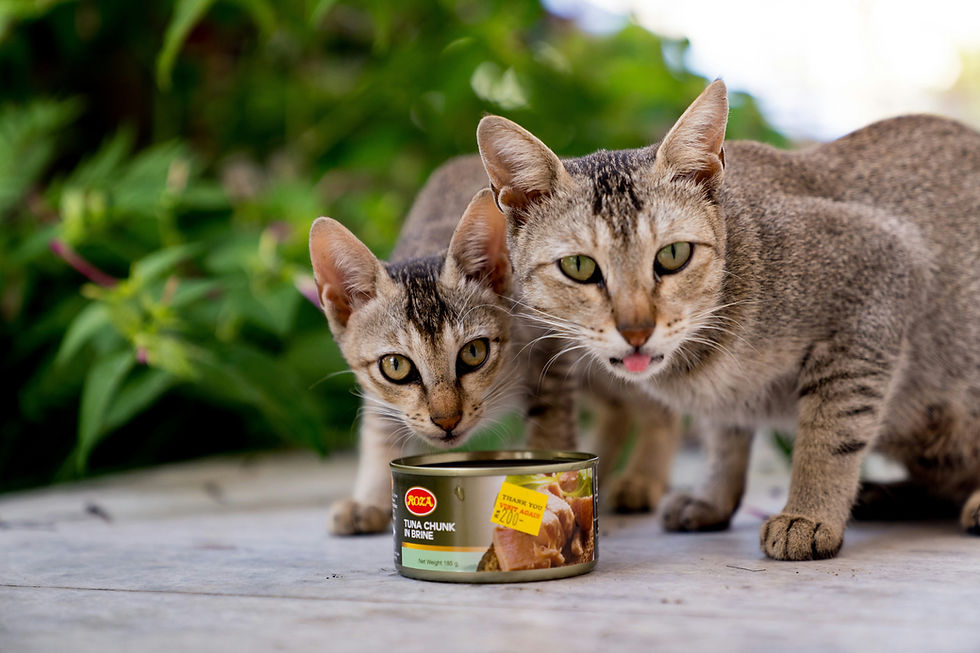
The Short Answer: Is Tuna Bad for Cats?
The quick answer is a classic "yes and no." Tuna itself is not actively poisonous to your cat. A single, tiny lick off your finger is not going to send you rushing to the emergency vet.
However, plain tuna meant for humans is absolutely unsafe as a regular food source for your feline best friend.
While a minuscule taste is okay, feeding human-grade tuna to your cat as a meal—or even as a frequent treat—can lead to severe nutritional imbalances, dangerous mercury accumulation, and some seriously difficult behavioral issues.
To understand why this incredibly smelly fish is problematic, we have to look closely at your cat's biology.
The Big Risks: Why Human Tuna Isn't Cat Food
I was raised in Los Angeles, CA by a veterinary ophthalmologist. She'd always quiz me on dog breeds on the street and I would fail, but I still learned a lot about animals!
One of the biggest lessons I learned growing up around a veterinary clinic is that cats have wildly specific dietary needs.
They are obligate carnivores, which means they need very specific nutrients from meat to survive.
Here is exactly what goes wrong when your cat eats too much tuna.
1. Severe Nutritional Imbalances
Human-grade tuna is simply not a complete diet for a cat. It severely lacks several essential nutrients that your kitty needs every single day.
If your cat fills up on tuna, they are missing out on vital antioxidants like Vitamin E. A heavy tuna diet can actually cause a painful condition called pansteatitis, also known as "yellow fat disease."
This is a severe inflammation of your cat's body fat that causes a high fever and makes it incredibly painful for them to move or be touched.
A tuna-heavy diet also lacks enough Vitamin K, B vitamins, calcium, and essential fatty acids.
Over time, these deficiencies can silently push your cat into developing bleeding problems, muscle weakness, and neurological tremors.
2. The Danger of Mercury Exposure
We hear a lot about mercury warnings for humans, but for cats, the stakes are so much higher.
Tuna—especially larger species like albacore—accumulate methylmercury because they are long-lived predators high up in the ocean food chain.
Now, think about your cat's size. Because a cat is so much smaller than a human, a standard 5-ounce can of tuna represents a massive dose of mercury for a tiny ten-pound animal.
Veterinarians warn that long-term, frequent tuna feeding can lead to outright mercury toxicity.
Signs of this include a wobbly gait, severe tremors, seizures, and bizarre behavior changes.
3. The Hidden Dangers of Raw Tuna
If you love sushi, you might be tempted to toss a piece of raw tuna to your begging kitty. Please don't!
Raw fish introduces a whole new level of risk. Raw tuna contains an enzyme called thiaminase, which aggressively breaks down thiamine (Vitamin B1) in your cat's body.
Cats fed raw fish can quickly develop a thiamine deficiency, leading to heart failure and severe neurological issues.
Plus, raw fish can carry nasty bacteria and release histamine as it sits, which triggers terrible itchiness and skin redness in felines.
The Rise of the "Tuna Junkie"
Beyond the physical health risks, there is a very real behavioral risk to opening that can. Tuna is intensely palatable to cats.
It is absolutely loaded with umami-active compounds that make your cat's taste buds explode with joy.
Because it tastes so incredibly good, many veterinary clinicians describe a phenomenon called the "tuna junkie."
A tuna junkie is a cat who becomes so completely fixated on the taste and smell of human tuna that they flat-out refuse to eat their normal, balanced cat food.
They will go on a hunger strike, screaming at you until you cave and give them what they want.
This creates a terrible, self-reinforcing cycle of malnutrition and toxin exposure. Your cat gets addicted to the junk food, and their health suffers because of it!
Cat Food Tuna vs. Human Tuna: What is the Difference?
You might be wondering, "Wait, if tuna is bad, why are there a hundred different tuna-flavored cat foods at the pet store?"
That is an excellent question! It is incredibly important to distinguish between human tuna and commercial cat food.
Canned tuna for humans is just plain fish. It is not formulated for feline bodies. Tuna-based commercial cat foods, on the other hand, are specifically formulated to meet strict nutrient profiles.
Reputable pet food manufacturers add essential taurine, vitamins, minerals, and antioxidants to the recipe.
When you buy a high-quality, balanced tuna cat food, the overall recipe meets all of your cat's daily needs.
Problems only arise when pet parents try to replace that specially formulated diet with a cheap can of human tuna from the pantry.
How to Safely Share Tuna (If You Must!)
You are doing an amazing job navigating the complicated world of feline nutrition! By researching what goes into their tiny bodies, you are setting your kitty up for a wonderfully long and healthy life.
If you have a healthy adult cat and you absolutely cannot resist their pleading eyes, here is how you can safely offer tuna without ruining their health:
Treat it as a tiny, rare reward: We are talking about a portion roughly the size of a single teaspoon, offered extremely rarely. It should never be a daily treat!
Choose the right can: Only use canned light tuna in water. Light tuna typically contains less mercury than albacore. Absolutely avoid tuna packed in oil, and never give your cat tuna that has added salt, garlic, onions, or flavorings.
Never replace a meal: Human tuna should never replace a balanced meal of complete cat food. It is strictly a high-value extra.
Watch for addiction: If your cat starts turning their nose up at their expensive kibble and holding out for tuna, stop giving them the fish immediately! Break the habit before it turns into a hunger strike.
Know when to skip it entirely: If your cat has kidney disease, clotting issues, a history of pancreatitis, food allergies, or a sensitive stomach, skip the human food entirely unless your vet specifically tells you otherwise.
Feeding your cat a healthy, species-appropriate diet is the best way to show them how much you love them.
The next time you make a sandwich, you can confidently give your kitty a tiny, safe taste—or just offer them a high-protein cat treat instead!
Does your cat magically appear the second a can opener is used? Have you ever had to deal with a stubborn "tuna junkie" in your house?
Share your hilarious food-stealing cat stories in the comments below—I absolutely love reading about your amazing felines!
Do you dream of that beautiful bond with your cat like you see on social media? I did too.
But instead, my cat just ignored me.
So, as the child of a veterinarian, I created an aloof cat bonding tool that walks you through exactly what to do each day in just 15 minutes.
Now my cat Remy won't leave my side.
Steal my hard-earned plan: you'll get an easy interactive daily checklist, 15 science-based games, and a progress tracker so you can see your cat slowly relax and seek you out.
Start your cat's bonding plan here!


Comments